 Back to blog
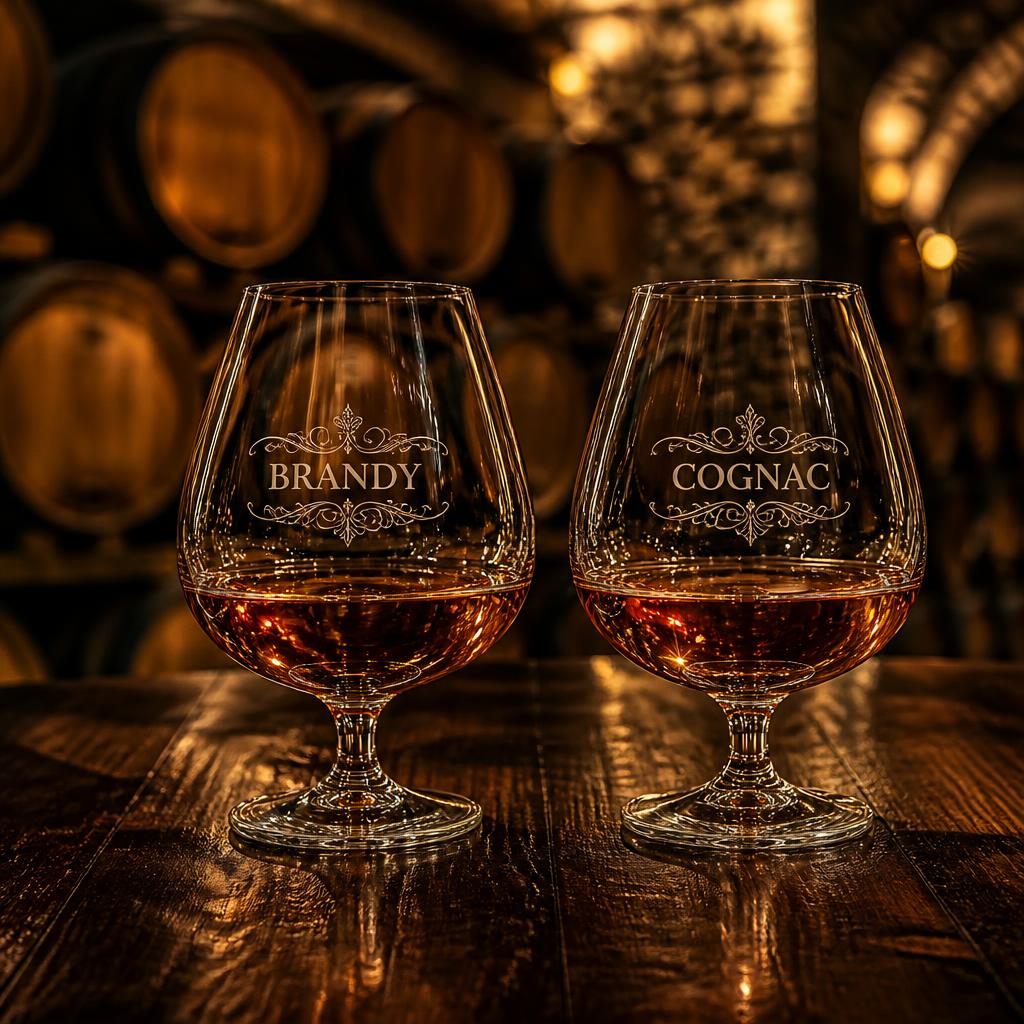
You’ve likely witnessed this scene: someone confidently pours an amber liquid into a snifter and respectfully whispers, "What a noble cognac!" Meanwhile, the label clearly reads Brandy in bold text. At that exact moment, somewhere in the Charente region, a French winemaker sheds a silent tear.
To ensure you never mix up these terms again and can showcase your expert knowledge at any gathering, AlcoHall is settling the score once and for all: what actually separates brandy from cognac, why the former always encompasses the latter, but the latter almost never goes by the former, and how geography, oak casks, and strict laws tie it all together.
Spoiler alert: it’s much simpler than it looks!
The Golden Rule to Remember
Let’s kick off with a golden formula that instantly clears up 90% of the confusion:
All cognac is brandy. However, not all brandy qualifies as cognac.
Think of it in terms of cars. There is a massive family of SUVs (that’s our brandy), and then there is a specific, iconic cult model-say, the Mercedes-Benz G-Class (that’s our cognac). There are plenty of great SUVs made all over the world, but the "G-Wagon" stands alone with its rigid build standards and distinct philosophy.
What is Brandy? (The Free Artist)
In essence, brandy isn’t a single, specific drink but rather a wide-ranging distilling technique. The word itself originates from the Dutch brandewijn, which translates to "burnt wine."
The concept is straightforward: take any fermented fruit juice (grape, apple, cherry, or raspberry), run it through a distillation still, and age the resulting high-proof spirit in wooden casks.
Brandy is all about absolute creative freedom:
- Where is it made? Anywhere! Moldova, Italy, Spain, the USA, or Greece. The laws do not anchor brandy to a specific geological coordinate.
- What is it crafted from? Any fruit base. If the distillate comes from apples, it’s Calvados (another variant of brandy); if it’s made from plums, it becomes Slivovitz or Rakia. When a label reads simply Brandy, it defaults to a grape-based spirit.
- What are the rules? Highly relaxed. Producers are free to experiment with grape varietals, aging periods, still designs, and can even introduce caramel or natural essences to soften the palate.
What is Cognac? (The French Aristocrat)
This is where strict regulations, centuries of heritage, and French pride step in. Cognac is an ultra-premium grape brandy bound by incredibly rigid laws, globally protected under the AOC (Appellation d'Origine Contrôlée) system.
To proudly display the word "Cognac" on a bottle, a house must rigorously respect a strict set of rules:
1. Geography and Terroir
The spirit must be produced entirely within France, inside a strictly mapped zone surrounding the town of Cognac (within the Charente departments). The local soil is uniquely rich in chalk and limestone, paired with an perfectly balanced climate. Attempting to replicate this process in Bordeaux or Rioja and calling it "cognac" is illegal.
2. Strict Grape Selection
Cognac cannot be made from just any vineyard yield. At least 98% of the blend must consist of the white grape variety Ugni Blanc (sometimes accented with Colombard or Folle Blanche). This specific grape produces a highly acidic, low-alcohol wine that is perfect for complex distillation.
3. The Craft of Distillation
No cutting corners. The wine must undergo double distillation exclusively in traditional copper pots known as Charentais alembic stills. Furthermore, the distillation window must conclude strictly by March 31st following the autumn harvest.
4. Century-Old Oaks
The cognac spirits must rest for a minimum of two years inside oak casks crafted from century-old trees sourced exclusively from the Tronçais or Limousin forests. Zero artificial colorings or flavor enhancements are permitted-just pure, unadulterated interaction between wood and time.
Quick Comparison: Main Differences
Origin
- Brandy: Worldwide (Moldova, Spain, Greece, USA).
- Cognac: Exclusively France (strictly the Cognac region).
Raw Ingredients
- Brandy: Grapes, apples, plums, any berries or fruits.
- Cognac: Only specific white grape varieties (predominantly Ugni Blanc).
Distillation Method
- Brandy: Any method (often continuous column stills for maximum smoothness).
- Cognac: Strictly double-distilled in copper Charentais alembic stills.
Aging Rules
- Brandy: At the master blender's discretion (can even be completely unaged).
- Cognac: Strictly inside Limousin oak barrels for no less than 2 years.
ABV & Taste Profile
- Brandy: Ranging from 35% to 60%. Taste varies from fruit-sweet to richly spiced.
- Cognac: Minimum 40% ABV. Features a complex palate layered with vanilla, fine oak, dried apricots, and floral violet notes.
What About Divin?
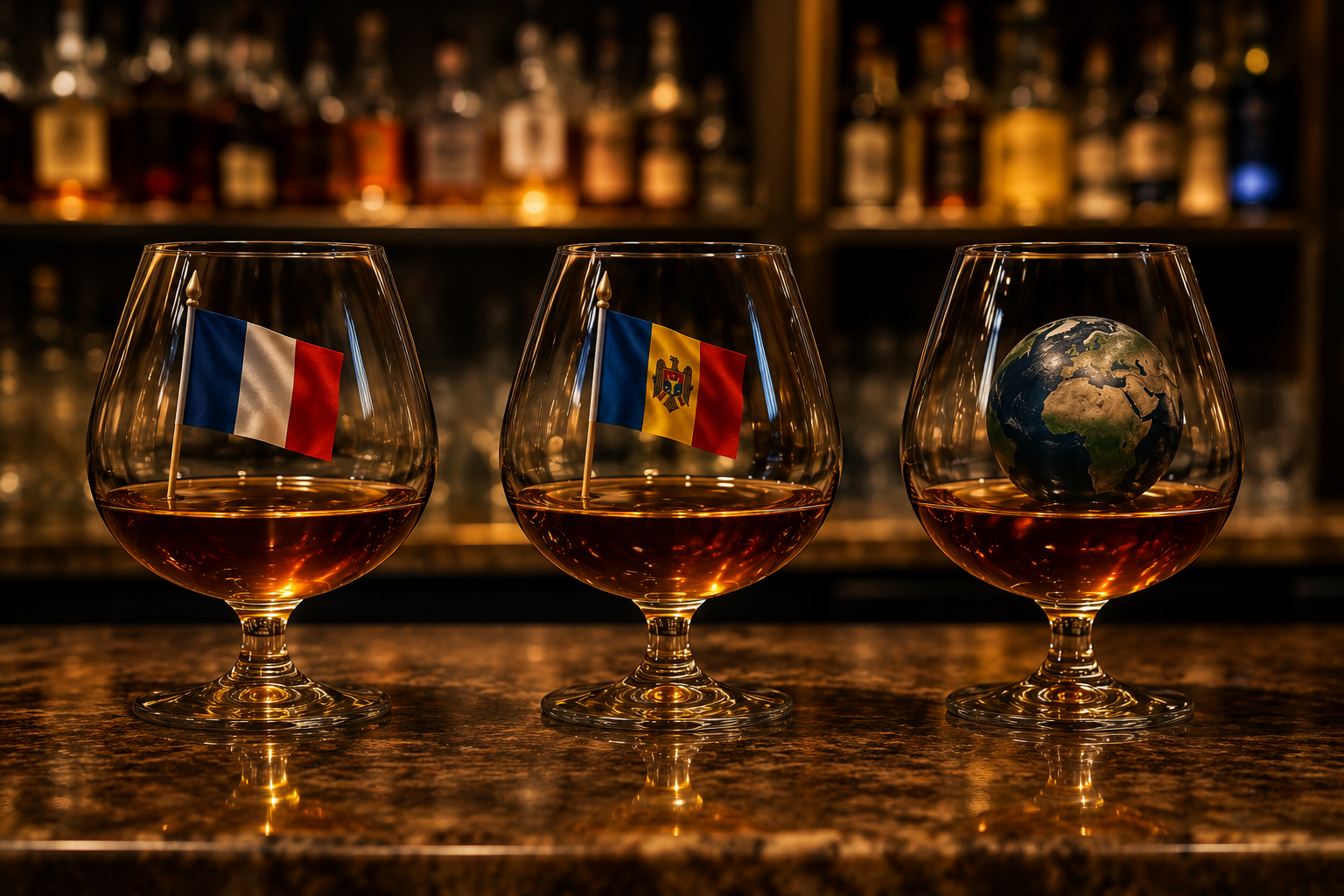
Living in Moldova, this is a question we encounter daily. Our shelves at AlcoHall frequently feature stunning bottles stamped with Divin from legendary domestic producers like Barza Albă, Bardar, or Călărași.
To put it simply, divin is our national pride and Moldova's exclusive answer to France. Technically, it is a world-class grape brandy crafted locally under strict traditional cognac methodologies (double copper-pot distillation, aged in fine oak casks). In terms of flavor profile and balance, our premium aged divins easily rival or outperform mid-tier French counterparts. However, due to international geographical naming rights, we utilize our own beautiful, patented name.
What to Choose at the AlcoHall Catalog?
Your choice ultimately comes down to your mood, the occasion, and your culinary pairing:
- For energetic parties or cocktail mixing: Go for an approachable, vibrant brandy (like the iconic Greek Metaxa with its signature herbal-honey notes) or a young 3-star divin. These shine beautifully over ice, with fresh juices, or anchoring classic mixes.
- For a slow evening paired with a cigar: Turn your attention to deeply aged Moldovan divins of VSOP or XO classifications. These are meditative spirits showcasing rich aromas of dark chocolate, warm resin, and aged oak.
- For a high-end corporate or milestone gift: Lean into timeless French heritage. A bottle of authentic cognac from historic houses like Hennessy, Courvoisier, Rémy Martin, or Martell from our premium collection communicates flawless taste better than any words can.
Explore the AlcoHall catalog, select your ideal expression, experiment with flavor profiles, and always remember: the essence of fine drinking lies in enjoying every single sip. Order online, and we will swiftly deliver your package straight to your doorstep anywhere in Chisinau!