 Back to blog
Bourbon is not just a strong alcoholic drink it is a piece of the American cultural code. Although many simply call it "whiskey," there is as much difference between them as there is between Champagne and sparkling wine. All bourbon is whiskey, but not all whiskey can be called bourbon. To earn this proud name, the spirit must meet strict U.S. legal standards.
What is Bourbon?
Bourbon is a unique type of American whiskey known for its distinct sweet profile and rich amber color.
Key Characteristics
The main difference between bourbon and its "cousins" (such as Scotch or Irish whiskey) lies in the raw materials and the aging method. While the Scots rely on malted barley, Americans chose the queen of the fields-corn.
Origins
The drink originated in the late 18th century in the USA. Its name is associated with Bourbon County in Kentucky, which was named after the French royal House of Bourbon as a gesture of gratitude for their help during the Revolutionary War. Kentucky remains the heart of production today, accounting for about 95% of the world's bourbon supply.
What is Bourbon Made Of?
The secret of bourbon's flavor lies in its composition, which is strictly regulated by the U.S. Federal Standards of Identity.
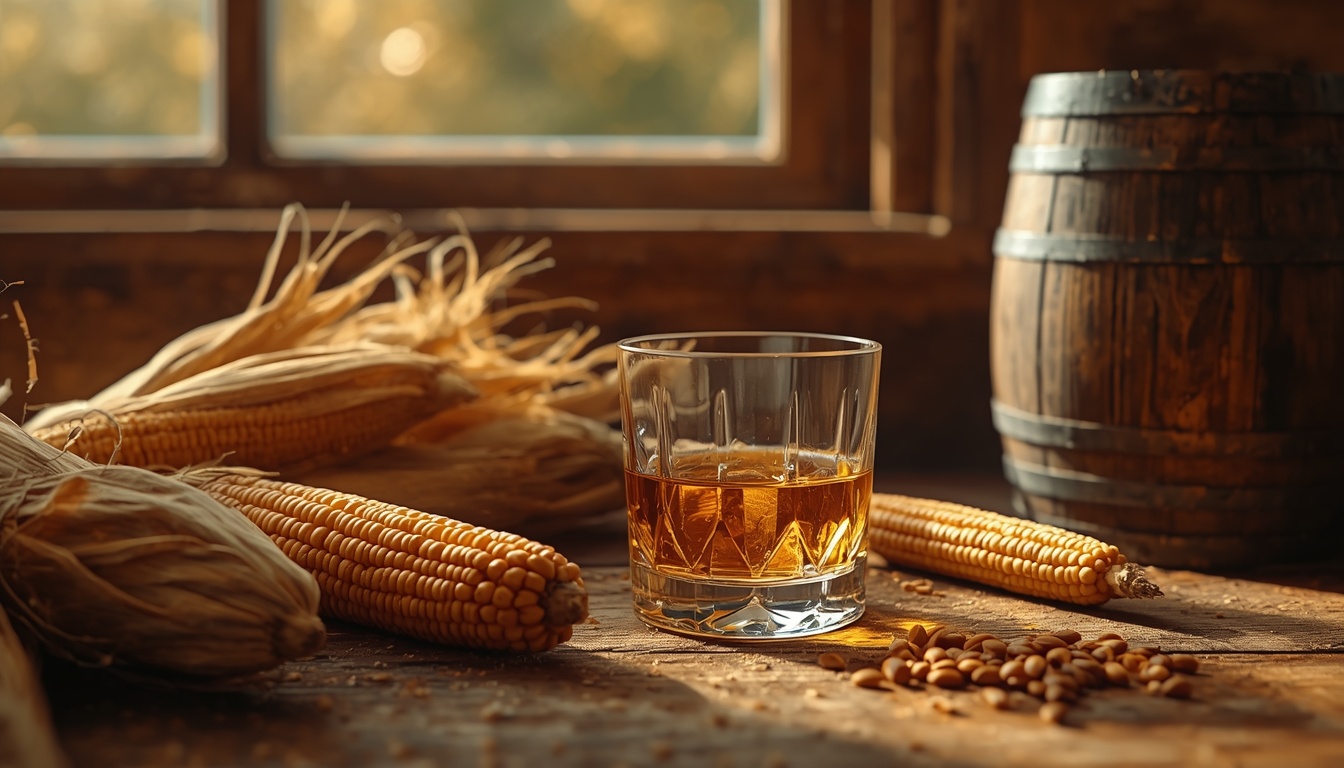
The Main Ingredient - Corn
By law, the "mash bill" (grain mixture) for bourbon must consist of at least 51% corn. It is this high corn content that gives the drink its characteristic sweetness, oiliness, and notes of caramel.
Permitted Grain Additives
The remaining 49% of the mash bill is usually divided among three crops:
- Rye: adds spice, sharpness, and a peppery finish.
- Wheat: makes the taste softer, more bread-like, and creamy.
- Malted Barley: essential for fermentation, as it contains enzymes that break down starch into sugar.
The Role of Water and Yeast
- Water: Kentucky is famous for its limestone layers. Water passing through them is filtered of iron (which ruins the whiskey's color) and enriched with calcium, making it ideal for yeast activity.
- Yeast: Every distillery has its own secret yeast strain, passed down for decades. They are responsible for creating unique esters-fruity or floral aromas.
How Bourbon is Produced
The process of turning grain into "liquid gold" consists of several key stages.
Distillation Process
The grain is ground, mixed with water, and cooked. The resulting wort is fermented with yeast, followed by distillation. By law, bourbon cannot be distilled to a strength higher than 80% ABV (160 proof). This preserves the maximum amount of aromatic compounds from the grain itself.
Aging in New Barrels
This is a critically important requirement. Bourbon must be aged exclusively in new charred American oak containers.
- New Barrels: Unlike Scotch, which often "finishes" in barrels previously used for bourbon or sherry, bourbon is always the first to touch the wood.
- Charring: The inside of the barrel is burned with fire to an "alligator char" state. This charcoal layer acts as a filter and simultaneously caramelizes the wood sugars, giving the drink notes of vanilla and smoke.
Conclusion
Bourbon is a spirit with character, dictated by harsh rules. The absence of additives (colorants or flavorings) ensures that every sip is an honest result of the interaction between grain, fire, and time.